Utterson–Jekyll relationship
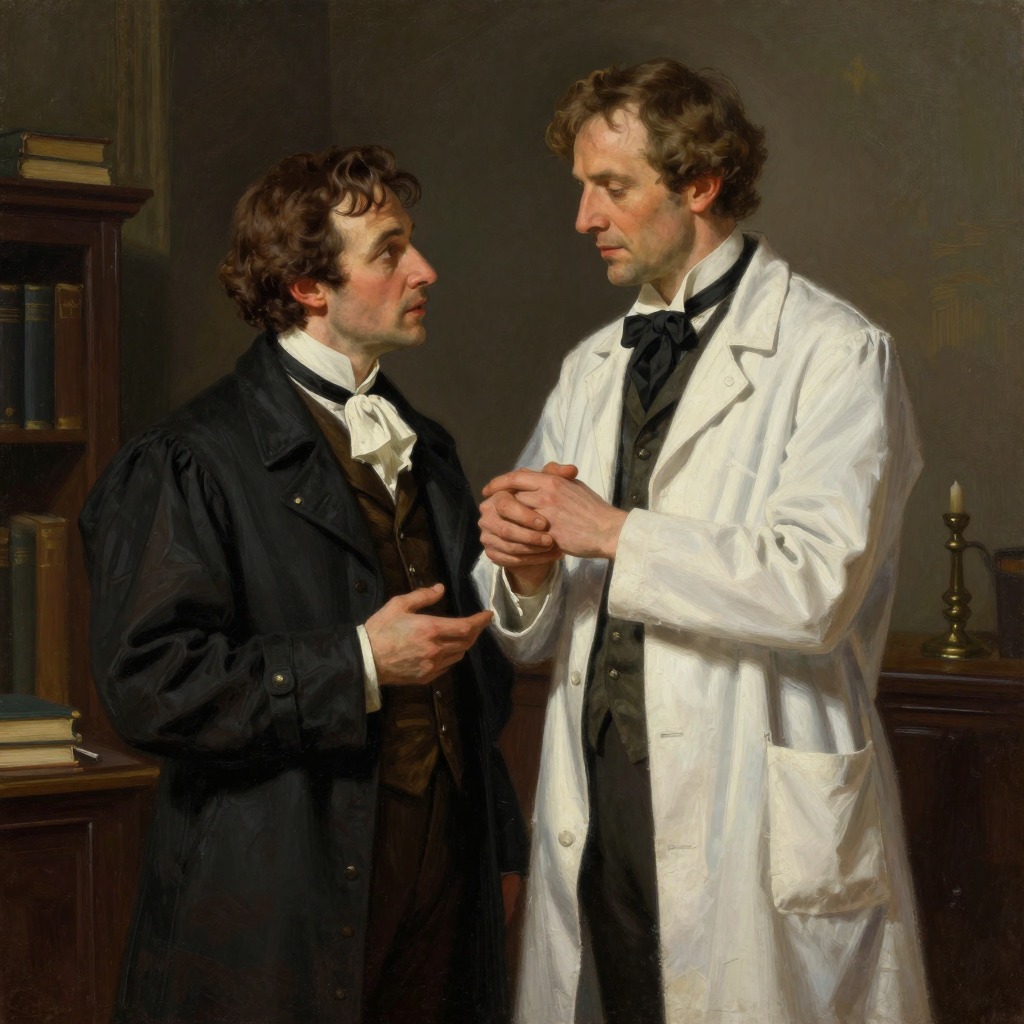
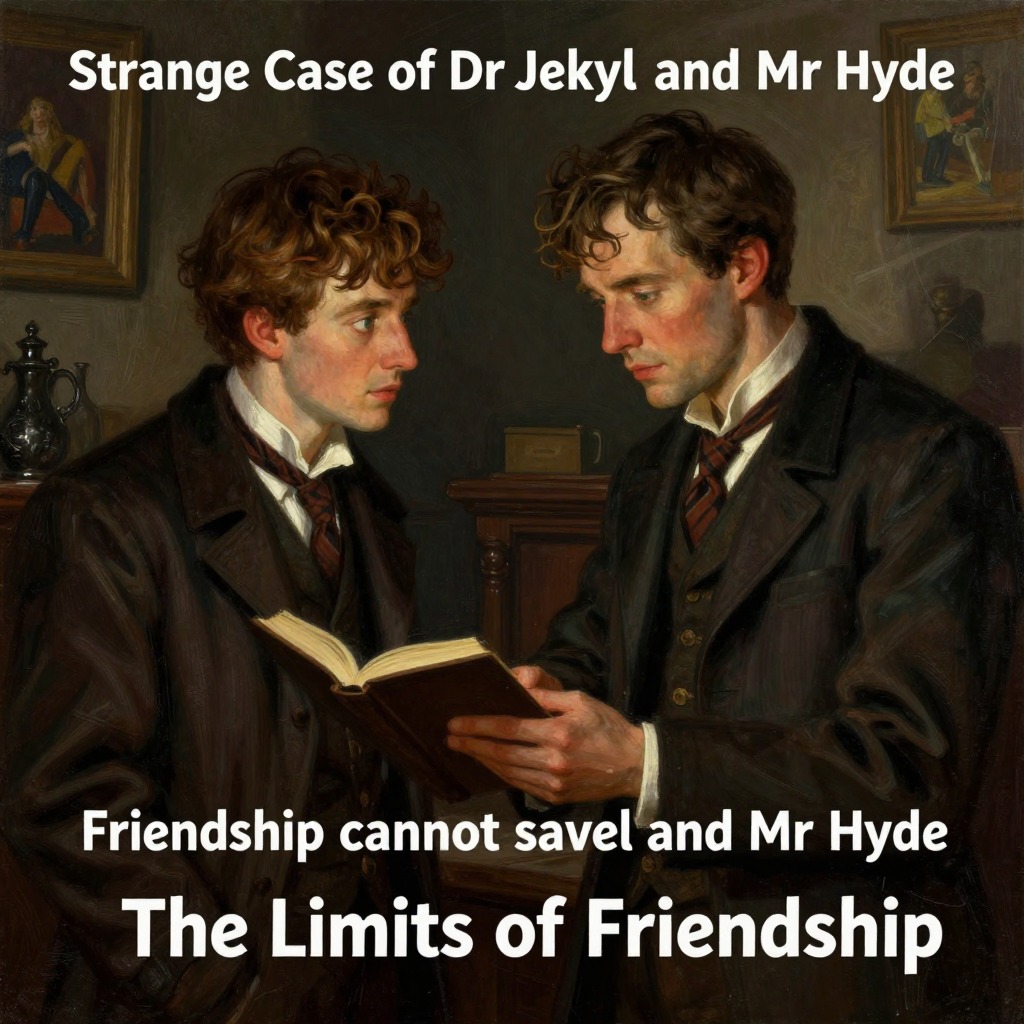
The relationship between Mr. Utterson and Dr. Henry Jekyll is the central investigative and emotional anchor of the novel, defined by Utterson's loyal, protective friendship and Jekyll's secretive, desperate dependence. Utterson serves as Jekyll's lawyer, confidant, and moral compass, yet his persistent attempts to understand and save his friend are repeatedly thwarted by Jekyll's evasions and the horrifying truth of his double life. The bond, built on years of mutual affection and trust, ultimately becomes a source of profound anxiety and helplessness for Utterson as he witnesses Jekyll's inexorable decline.
Identity and Foundation of the Friendship
Mr. Utterson, the lawyer, is introduced as a man of rugged countenance, cold and scanty in discourse, yet somehow lovable, with a deep-seated tolerance for others. His friendship with Jekyll is one of long standing, rooted in a shared history and a mutual respect that transcends their differing temperaments. Utterson is the keeper of Jekyll's most private legal document, the will, which he holds in his safe and studies with a clouded brow. The will, which leaves everything to Edward Hyde, has long been the lawyer's eyesore, offending him both as a lawyer and as a lover of the sane and customary sides of life. This document is the first concrete evidence of a strange bond between Jekyll and Hyde that Utterson cannot comprehend. The friendship is also part of a trio that includes Dr. Hastie Lanyon, another old school companion, though Lanyon and Jekyll have grown apart over scientific disagreements. Utterson, however, remains a constant, a man who is trusted by Jekyll above all others, as Jekyll himself later affirms: "I would trust you before any man alive, ay, before myself, if I could make the choice."
The Lawyer's Protective Concern and Jekyll's Evasion
Utterson's concern for Jekyll is immediate and practical. After hearing Mr. Richard Enfield's story of Hyde trampling a child, Utterson's mind is consumed by the connection to his friend. He goes directly to Jekyll's house, only to be told by the butler Poole that the doctor is out, but that Mr. Hyde has a key and is to be obeyed. This deepens Utterson's unease. He later confronts Jekyll directly about the will and his association with Hyde. Jekyll's reaction is telling: his large handsome face grows pale to the very lips, and a blackness comes about his eyes. He refuses to discuss the matter, saying, "I am painfully situated, Utterson; my position is a very strange—a very strange one. It is one of those affairs that cannot be mended by talking." Despite Utterson's offer to help, Jekyll insists it is a private matter and begs him to let it sleep. Yet, in the same breath, Jekyll asks Utterson to promise that if he is taken away, Utterson will bear with Hyde and get his rights for him. Utterson, though he cannot pretend to like Hyde, gives his word: "Well," said he, "I promise." This promise binds Utterson to a course of action he finds deeply distasteful, driven solely by his loyalty to Jekyll.
The Strain of the Carew Murder and the Letter
The murder of Sir Danvers Carew, a client of Utterson's, shatters any pretense of normalcy. Utterson identifies the victim and the broken cane, which he himself had given to Jekyll years before. He leads the police to Hyde's Soho lodgings, but Hyde has fled. When Utterson next sees Jekyll, the doctor is deathly sick, confined to his cabinet over the laboratory. Jekyll swears he is done with Hyde forever, but his manner is feverish. He gives Utterson a letter from Hyde, which the lawyer later discovers, through his clerk Mr. Guest's analysis of handwriting, bears a singular resemblance to Jekyll's own hand. The implication that Henry Jekyll might have forged a letter for a murderer sends a cold shock through Utterson. He locks the note in his safe, his blood running cold. The trust between them is now shadowed by a horrifying suspicion.
The Break with Lanyon and Jekyll's Seclusion
After Hyde's disappearance, Jekyll briefly returns to his old self, renewing relations with friends and becoming distinguished for his charities. But this peace is short-lived. On the 12th and 14th of January, Utterson is denied entry to Jekyll's house. He then visits Lanyon, who is visibly dying from a shock he refuses to explain, and who declares he wishes to see or hear no more of Dr. Jekyll. Utterson writes to Jekyll, who replies with a long, pathetically worded letter, stating the quarrel with Lanyon is incurable and that he must lead a life of extreme seclusion. "You must suffer me to go my own dark way," Jekyll writes. "I have brought on myself a punishment and a danger that I cannot name." Utterson is amazed and deeply troubled; the prospect of a cheerful and honored age for his friend has been wrecked in a moment. He continues to call, but is perhaps relieved to be denied admittance, preferring to speak with Poole on the doorstep rather than enter that house of voluntary bondage.
The Final Night and the Breaking of the Door
The climax of their relationship comes on the last night, when Poole arrives at Utterson's house in a state of terror. The butler is convinced that his master has been murdered and that something else is living in the cabinet. Utterson, though initially skeptical, is persuaded by Poole's evidence: the strange voice, the desperate orders for drugs, and the sight of a masked, dwarf-like figure. Utterson resolves to break down the door, saying, "I shall consider it my duty to break in that door." He takes up the kitchen poker as a weapon. At the door, he calls out, "Jekyll," and demands to see him. The voice that answers is not Jekyll's but Hyde's: "Utterson," said the voice, "for God's sake, have mercy!" This confirms Utterson's worst fears. After the door is forced, they find the body of Edward Hyde, still twitching, having taken his own life with a crushed phial. Utterson's first thought is for his friend: "It only remains for us to find the body of your master." But no trace of Henry Jekyll, dead or alive, is found anywhere.
The Legacy of the Confession
In the cabinet, Utterson finds a new will, written in Jekyll's hand, naming him as the beneficiary instead of Hyde. He also finds a note from Jekyll instructing him to first read Lanyon's narrative and then Jekyll's own full statement. Utterson takes these documents home to read in quiet, finally learning the full, horrifying truth of his friend's double existence. The relationship, which began with a lawyer's professional concern and a friend's loyalty, ends with Utterson as the sole executor of Jekyll's tragic legacy, the keeper of a secret so terrible it has already killed one friend and driven another to suicide. His role shifts from protector to mourner, left to piece together the story of a man he could not save.